
Astrophotography arcade · iPhone & iPad
Space
Exposures
Chase the stars.
Dodge the clouds.
Capture the joy — and frustration — of a clear, starry night. Match your lens to the sky, line up the perfect photo and keep the clouds from spoiling your score.
A good photo is worth the points.
Choose your lens.
Use a wide-angle lens for the Northern Lights and a telephoto lens for a small planet. The right lens and a well-framed shot earn more points.
Build your combo.
Chain perfect shots for a growing combo bonus. Capture objects early for bonus points and watch your remaining film.
Survive the night.
Start with three lives. Dodge clouds or spend 1,000 points to break one up. Keep shooting through 150 seconds of night and 10 seconds of dawn.
A night in Space Exposures.
Select a screenshot to view it full size.
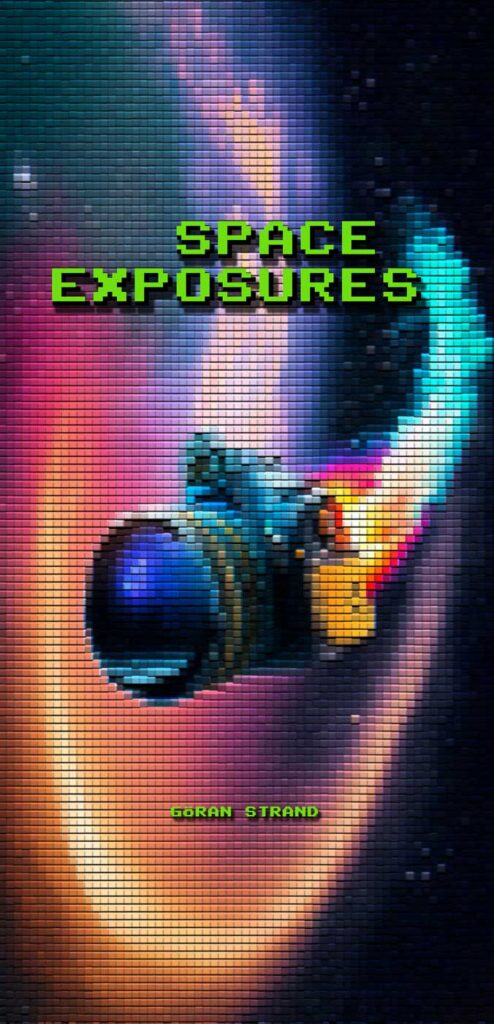
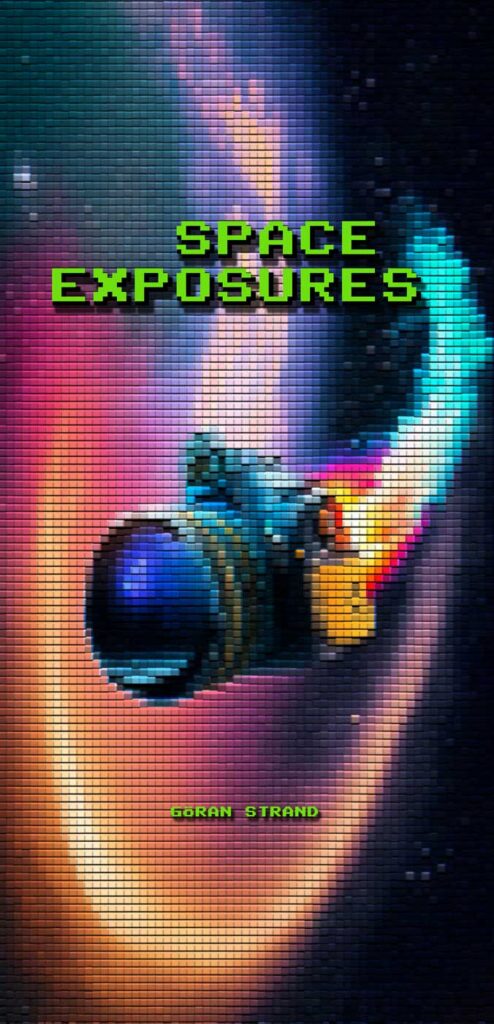
Title screen
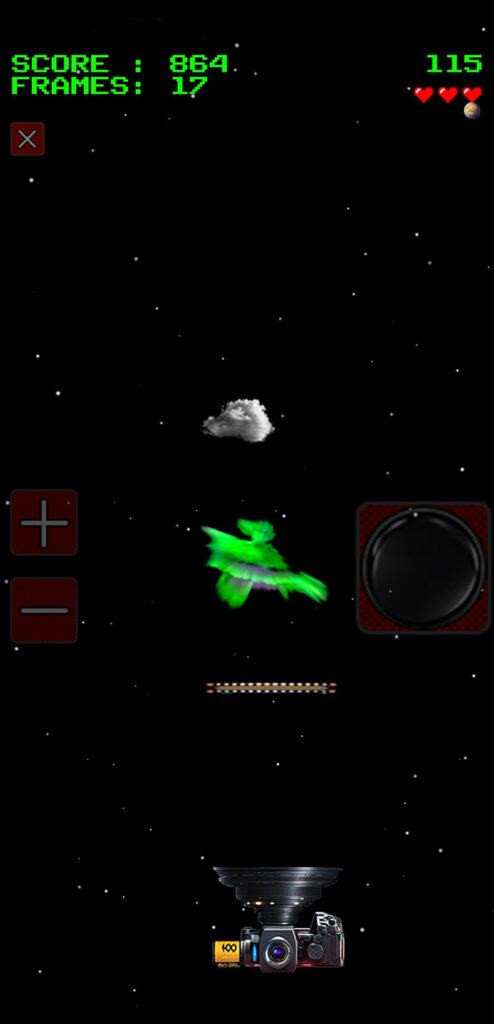
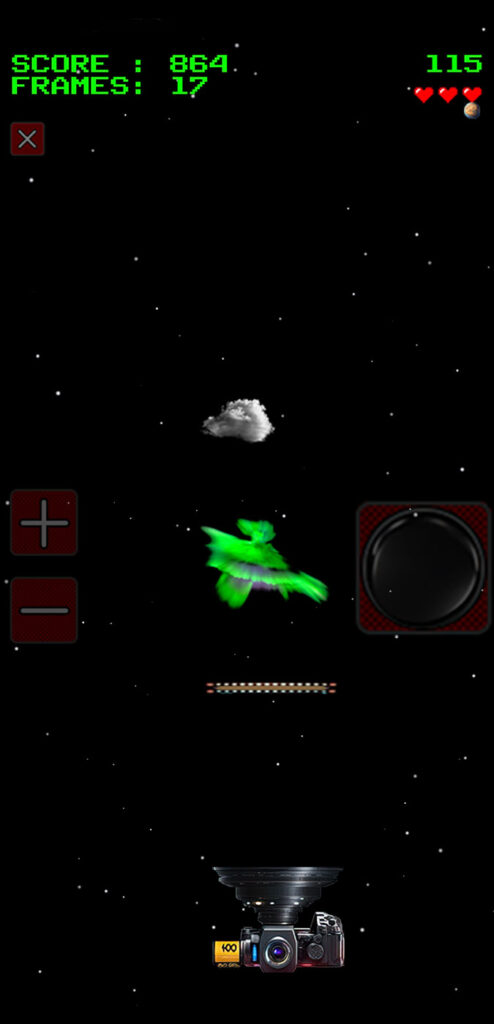
Out under the stars
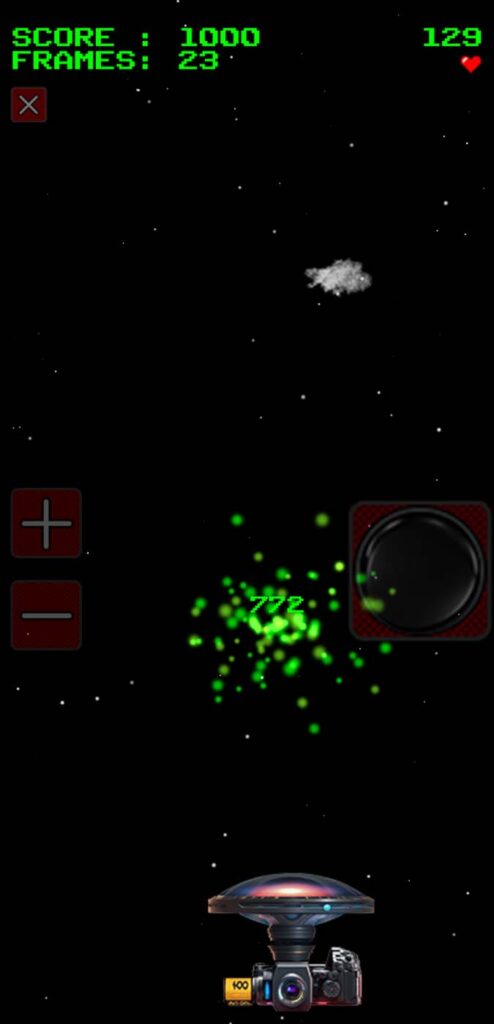
Gameplay view 2
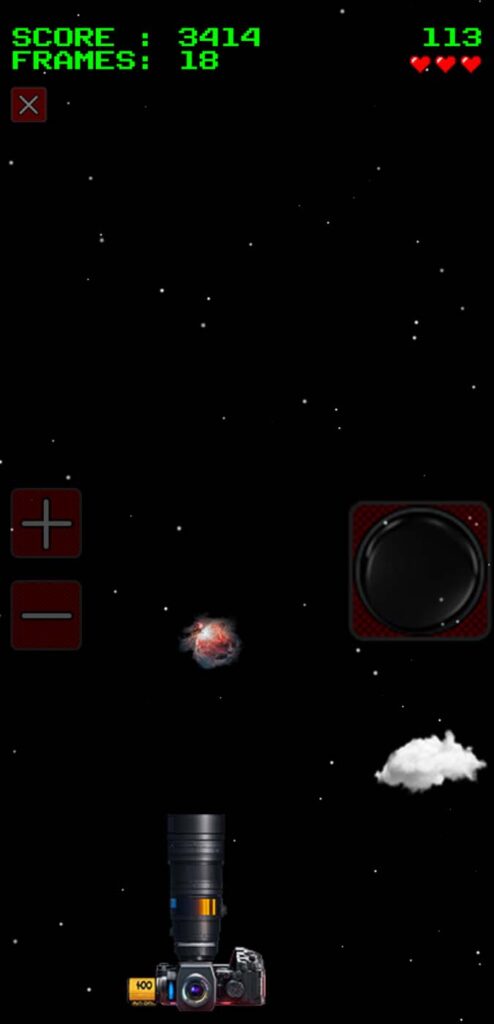
Gameplay view 3
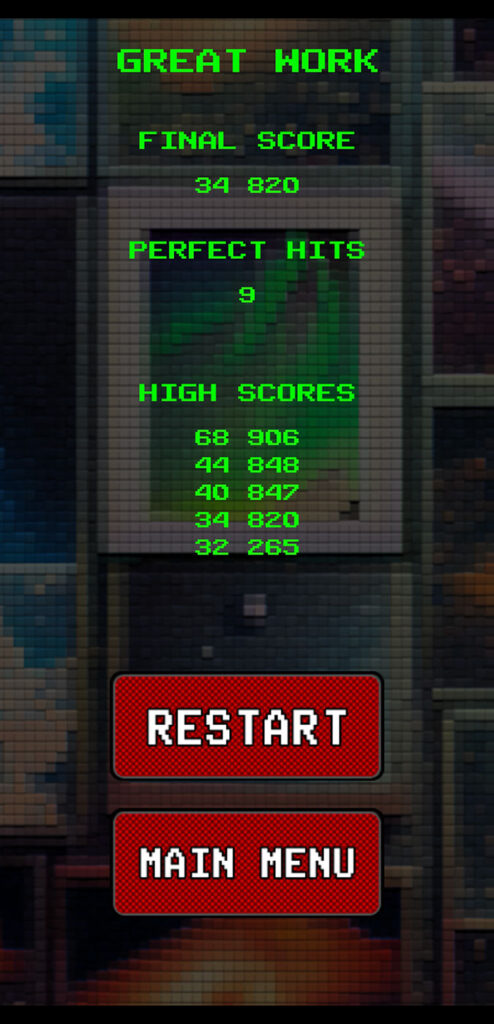
Gameplay view 4
See the game in motion.
Behind the lens.
The story behind the game
The idea for this game came to me in 2023 when I helped my son with his programming project for school. After helping him, I realised that it had been ages since I’d done any computer programming and that it was fantastic fun to be grappling with solving coding problems again. You see, I actually used to work as a programmer during the 1990s and early 2000s before I decided to become a full-time photographer in 2012.
OK then, I wanted to create a game but what kind of game should it be? For which platform should I make it? And not least, how should it look? After a few days of thinking the idea suddenly appeared, like a bolt of lightning from a clear sky. Of course, I had to make a mobile, astrophotography-themed game with a bit of a retro arcade feel to it – like Space Invaders but for astrophotography.
I immediately started to outline the functionality and content I wanted to include. The most important thing was creating a way to determine whether the player managed to take a good photo with the right equipment. So the first thing I did was sketch out a score-calculation system that takes several aspects of photography into account in the calculations. I’m very happy with how this scoring system works in the end. The score is calculated based on how well the lens you choose matches the object you are photographing (Focal distance), how well you capture the entire object in the photo frame (Composition) as well as the distance to the object. If the object is too close when you take the photo there’s a risk that it will be blurry, but if you’re quick and snap the object early on you get bonus points.
After that it was time to design all the graphics; the camera, different lenses, menus, buttons and so on. Such a fun and inspiring process, but it was also really time-consuming. The tricky part was getting the graphical style to hang together throughout the entire game. My goal was to make the graphics feel both futuristic and retro, to recreate the feel of the old arcade games.
In the end I chose iPhone as the platform, simply because I have an iPhone myself. I’ve never previously worked in Xcode or Swift, the development platform and language for making iPhone apps and games, so the first thing I needed to do was teach myself how to program in Swift and learn the tools for producing games. During the process I constantly learnt new problem-solving techniques, so the game has undergone loads of changes along the way.
How to play
So what is Space Exposures about? The idea of the game is for you as an astrophotographer to try to take as many good photos as possible, the better the photo the more points you get per hit. A good photo is when you use the right lens for the right object. For example, a large Northern lights needs a wide-angle lens (Short and wide) while a small planet requires a longer telephoto lens (Long and thin). To capture the perfect photo, you also need to hit the object so that it covers the entire film frame that is shot from the camera. If you only hit half or a small part of the object, you lose points. If you use the wrong lens on the wrong object, for example a wide-angle lens on a small planet, you also lose points.
You see the number of points you get for each hit registered, so you have to learn which lens gives the most points for each object. If you get a perfect hit, you’ll be rewarded with a little fanfare and fireworks. If you get several perfect hits in a row, you get a combination bonus (Combo) that increases with every perfect hit. If you miss an object or don’t get any perfect hits, your combination bonus will re-start from zero again.
To get through the night, you have to avoid colliding with clouds, the astrophotographer’s worst enemy. Every time you collide you lose a life (you start with three lives). You can break up the clouds by pressing on them, but it costs you 1000 points per cloud you break up. It’s every astrophotographer's dream to be able to blast away clouds in real life, and now I’ve finally had the chance to make that dream come true.
A night lasts for 150 seconds. After that comes 10 seconds of dawn when you can still take photos, but these aren’t worth as many points as the object isn’t as clearly visible during dawn. Keeping your eye on how much film you have left is also important. If you run out of film, you can pick up new rolls of film along the way.
Ideas for the future
I have loads of ideas for how I’d like to develop the game further, and I’m happy to receive suggestions on how it can be improved. For instance, it would be cool if players could upgrade their equipment or if the game contained different levels. I don’t really have the time to continue developing it at the moment, though (so far I've done it in my spare time and during holidays). But who knows what the future holds?